How Missouri roof insurance claims actually work
Eight moves, in order, from the storm to the last cheque. This page names who owns each one, because in this state that question has a legal answer and almost every roofing website in the metro gets it wrong on purpose.
Start with the eight steps or who does what. The inspection is a building service by Keys Roofing, the contractor. The claim stays yours.
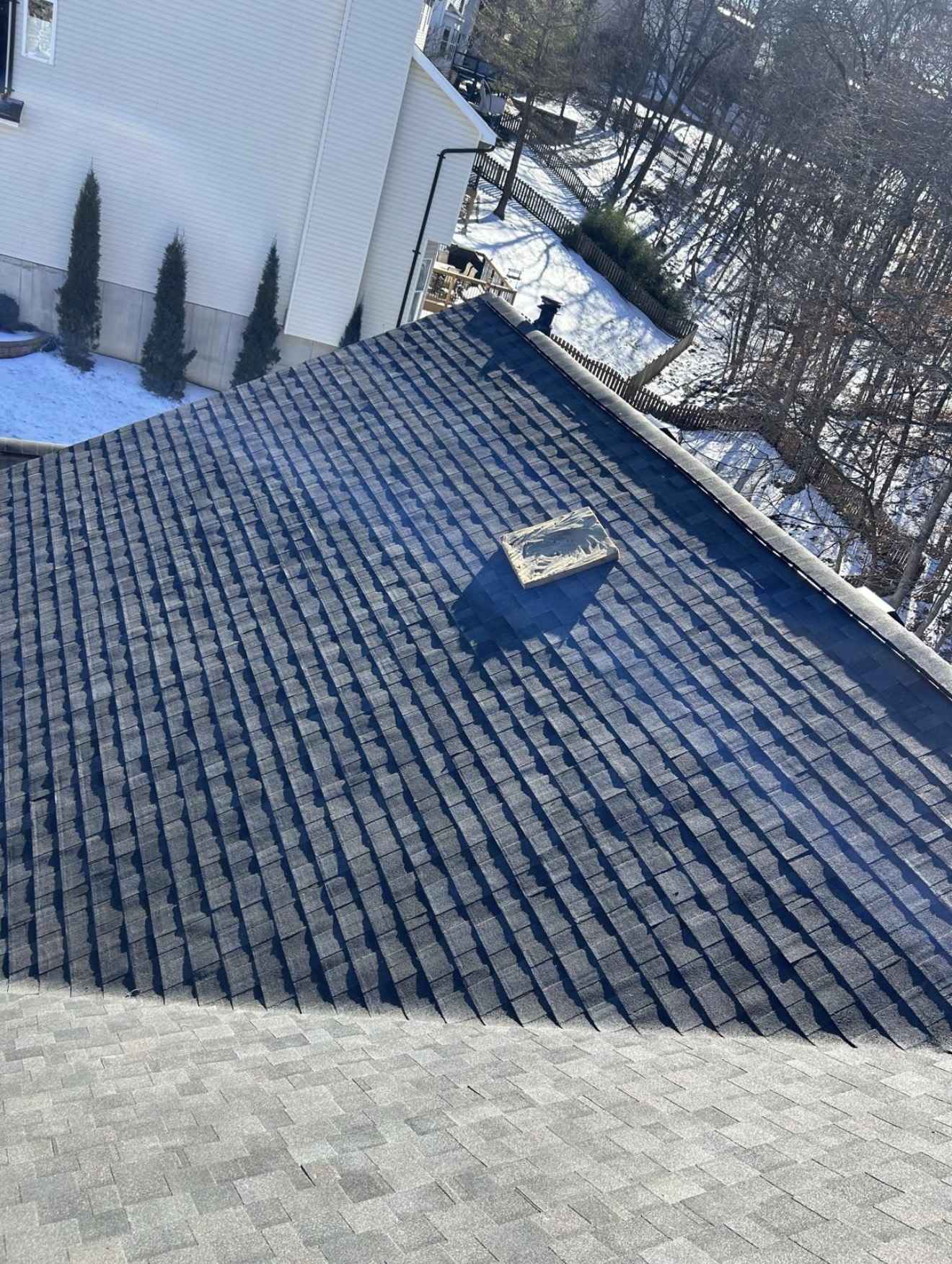
- Whose claim is it
- Yours. It is opened in your name, paid to you, and closed by you.
- What a roofer may do
- Document the roof and attend the inspection as the contractor.
- What no roofer may do
- Represent or negotiate the claim, or advertise that it will.
- Governing section
- RSMo 407.725, Missouri Merchandising Practices Act
- Typical elapsed time
- Three to six weeks outside a catastrophe. Months after one.
Five actors. One of them is you, and it is not a close call.
A roof claim looks complicated because five different parties touch it and nobody labels which is which. Here they are labelled. Every claim on this site carries one of these chips, so you can always see whose move is being described.
You own the policy, you open the claim, the claim number is yours, the estimate is addressed to you, the payments are made out to you and, if there is a mortgage, to your lender alongside you. You are the only person who can accept, dispute, reopen or close it. Nothing in this process transfers that to anybody else, and in Missouri nothing may.
The carrier decides coverage, writes the estimate, sets the depreciation, issues payment and states in writing why. Everything it decides, it must be able to put on paper. Ask for the paper every single time, including the full estimate with line items, not the one page summary.
Usually a contractor to the carrier rather than an employee of it, especially after a metro-wide storm when out of state catastrophe crews are flown in. They climb the roof, take their own photographs, and write what they saw into the carrier's estimating software. They are not the decision maker and they are not your opponent.
Measures the roof, photographs its condition, writes a scope of the work the roof needs, prices that work, and builds it if you hire them. A contractor can be on the roof during the adjuster's inspection and point at what they found. That is the whole of the contractor's lane, and it is narrower than the advertising in this market suggests.
"A contractor shall not represent or negotiate, or offer or advertise to represent or negotiate, on behalf of an owner or possessor of real estate on any insurance claim in connection with the repair or replacement of roof systems."
Subsection 7 of the same section makes a violation an unfair practice under the Missouri Merchandising Practices Act, which carries private-action exposure. Subsection 2 separately bars a roofing contractor from advertising or promising to absorb or rebate any part of an insurance deductible. This is not a technicality that nobody enforces: it is the reason this site describes a procedure instead of selling you a champion.
Eight moves, storm to final cheque
The full version of each of these, with the paperwork and the failure modes, is on the eight steps page. This is the shape of the thing.
-
Day zero
Weather
A dated storm passes over your address
Wind, hail, a limb, a tornado. The date matters more than anything else you will write down, because every subsequent question, from coverage to causation to whether a shingle was already old, gets argued against that date. Write it down the day it happens.
-
Day zero to two
Your move
You photograph what you can see, from the ground
Downspout splash, granules washed into the gutter outlet, dented soft metal on the vents, a stain on a bedroom ceiling, hail on the deck rail. Timestamps are automatic on a phone and they are worth more than any of the pictures individually. Do not get on the roof.
-
Day one to seven
Contractor
A roofer documents the roof and writes a scope
Photographs of each slope, a measurement of the roof, and a written statement of the work the roof needs and what that work costs. It is a builder's document about a building. You keep it whether or not you hire them, and whether or not there is ever a claim.
-
Day one to fourteen
Your move
You report the loss and get a claim number
You do this. Not your roofer. Have the date of loss, the address, the policy number and a plain sentence about what you noticed. You are reporting a loss, not arguing a case, and the fewer conclusions you volunteer at this stage the better.
-
Day three to thirty, or much longer after a catastrophe
AdjusterContractor may attend
The field adjuster inspects the roof
They chalk test squares, count hits per square, photograph the soft metals and the shingle mat, and measure. Your contractor can be up there at the same time, as the contractor, showing what they found. The whole appointment is on its own page.
-
Day seven to forty five
Insurer
The written estimate and the first payment arrive
A line item estimate, a summary sheet, and normally a cheque for actual cash value: replacement cost minus your deductible minus depreciation. That cheque is not the whole settlement under a replacement cost policy, and the difference is the single most misunderstood number in this process. The mechanics are here.
-
Whenever you are ready
Your moveContractor
You contract the work and the roof gets built
You are not obliged to use whoever inspected it, to accept the insurer's preferred vendor, or to spend the money on the roof at all unless a mortgage endorsement says otherwise. The contract is between you and the roofer, and its number is the roofer's number, not the carrier's.
-
On completion
Your moveInsurer
Final invoice, and any withheld depreciation is released
The completed invoice and the final photographs go to the carrier. Under a replacement cost policy the withheld depreciation is then released, up to what you actually incurred. Under an actual cash value policy there is nothing further to release, which is why step six mattered so much.
Two hundred and fifty three thousand claims in one season
The Missouri Department of Commerce and Insurance counted 253,241 catastrophic claims from the 2025 season, with more than $2.9 billion paid and roughly 83% of it residential. That is the volume the field adjuster queue was carrying while homeowners waited for a call back.
The single worst day was 16 May 2025, when an EF3 tornado rated at 152 mph began near Clayton at 2:41 in the afternoon and cut a 22.6 mile path across the city, reaching 1.8 miles wide and killing five people. No wider tornado appears in National Weather Service records for this region going back to 1950. FEMA declaration DR-4877-MO covered St. Louis City and County and approved 9,427 households for individual assistance, $58.13M in individual and households programme money and $105.01M in public assistance.
Hail is the steadier background. NOAA logged 125 hail reports in St. Louis County between 2020 and 2025, largest stone 2.5 inches, average 1.32 inches, against 54 in St. Charles, 44 in Jefferson and 30 in Franklin. Read those as counts of reports that somebody phoned in, not as insured losses: reporting density tracks population, so a dense county logs more hail than a thinly settled one that got the same storm. April and May carry roughly 56% of the metro's annual hail reports.
Sources named on the page: Missouri DCI at insurance.mo.gov for the claim and payment figures; the National Weather Service for the tornado rating, path and width, and NCEI for the damage estimate; FEMA for DR-4877-MO; NOAA Storm Prediction Center storm reports for the hail counts and the seasonal share.
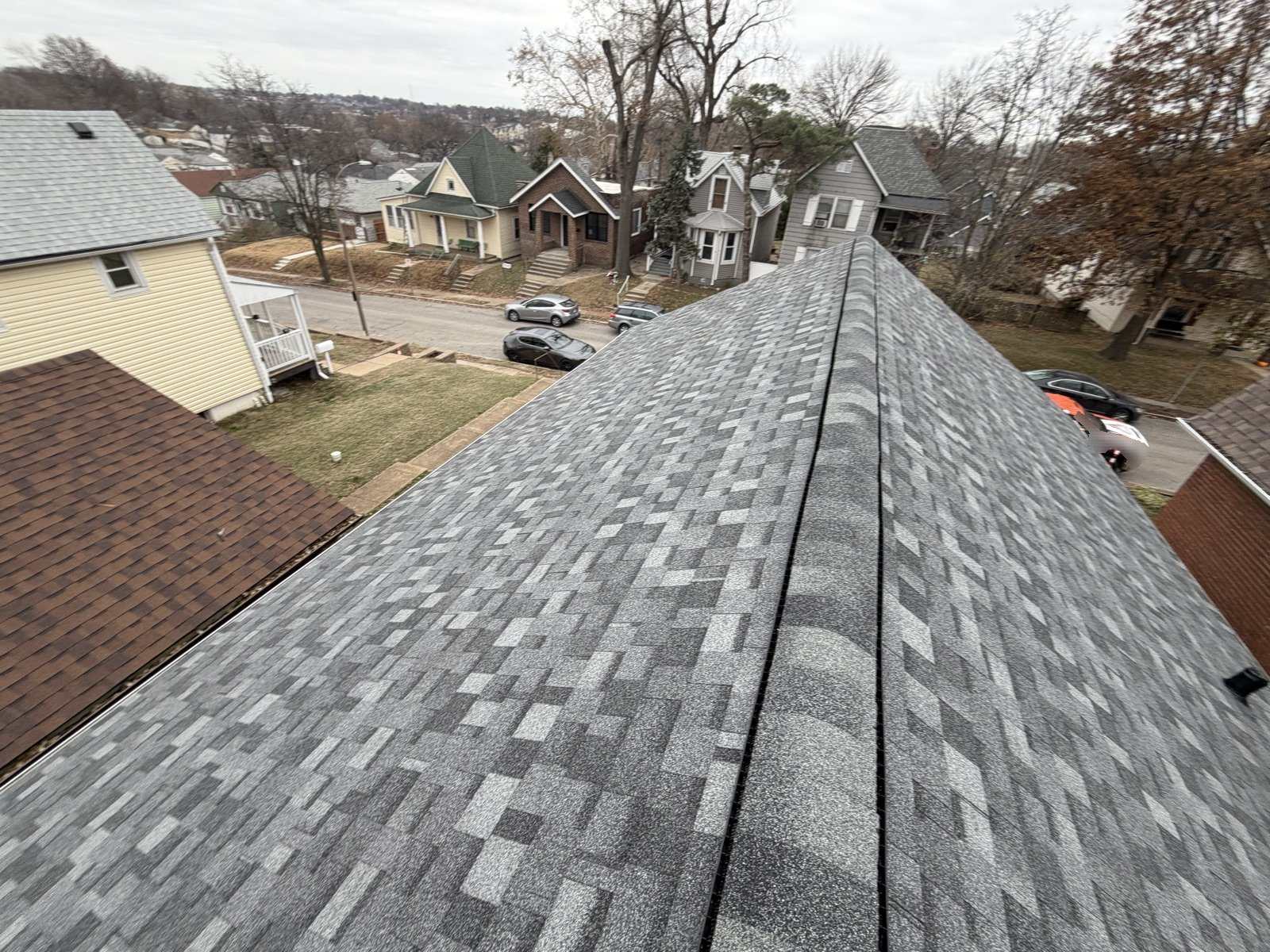
Four things a roofer adds, and they are all documents or labour
Strip out everything a Missouri roofer is barred from doing and this is what remains. It is less glamorous than the billboards and it is the part that changes outcomes.
- Photographs of every slope, datedA homeowner cannot safely produce these and an adjuster's photographs belong to the carrier. Yours are the only set you control.
- A measurement of the roofSquares, pitch, ridge and hip footage, valley footage, number of penetrations. Estimates get argued in these units, so having your own set matters.
- A written scope of the work the roof needsTear-off, decking, underlayment, flashings, boots, ventilation, ridge, disposal. A statement about a building, in a builder's language.
- Presence at the inspection, as the contractorStanding on the roof beside the adjuster and pointing at what was found. Answering questions about the building. Not speaking for you, and not for your claim.
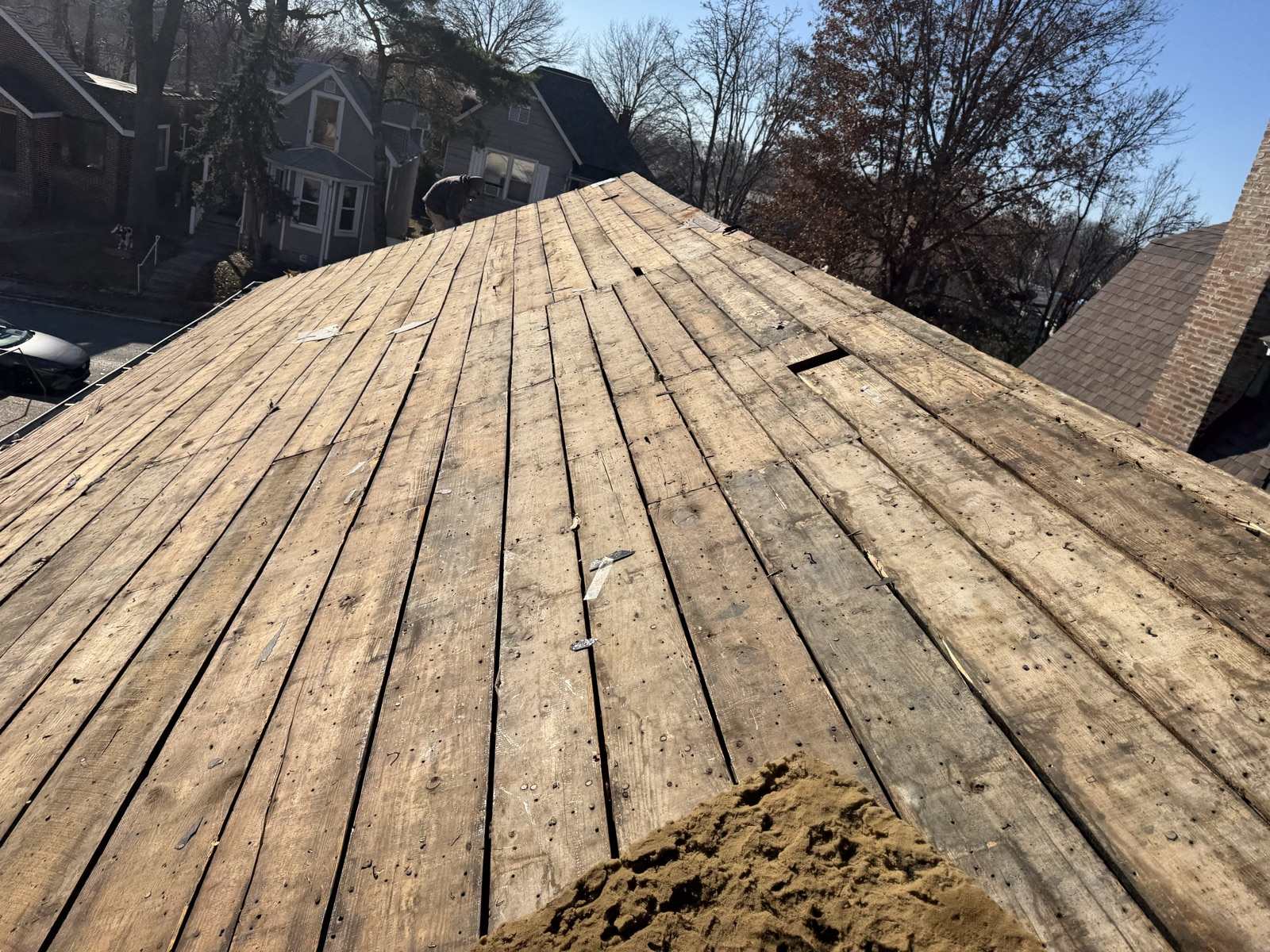
Each one is a part of the process people get stuck on
None of this is legal advice and none of it is insurance advice. It is a description of a procedure, written by a contractor who watches it run several times a week in this metro.
The eight steps in full
Every move from the storm to the final cheque, with the document each one produces and the way each one usually goes wrong.
Read this page → 02Who does what, exactly
The six parties who touch a roof claim, what each of them is empowered to do, and the four things Missouri closes off to a roofer.
Read this page → 03The adjuster appointment
What happens in the ninety minutes the field adjuster is at your house, what they are measuring, and what to have in your hand.
Read this page → 04ACV, RCV and depreciation
Why the first cheque is smaller than the estimate, what recoverable depreciation is, and what the state's own regulator says about ACV roof policies.
Read this page → 05Deadlines that actually bind
Ten years to sue, a suit-limitation clause Missouri voids outright, and the two deadlines inside your policy that really do run out.
Read this page → 06The deductible, and a tax credit
How the deductible works in a roof claim, what no roofer may offer you about it, and a Missouri credit that stops issuing in October.
Read this page → 07When a claim is denied
The difference between a denial and a low estimate, how a reinspection is requested, and the routes that exist after that.
Read this page → 08Matching and partial roofs
Missouri has no matching statute. What that means when one slope is hit, what the case law says, and why the rule people quote is about cars.
Read this page → 09Public adjusters in Missouri
A separate licensed profession that can do the thing a roofer cannot, what it costs, and the rule that keeps them off your roof.
Read this page →Before you call anybody
Can my roofer just deal with it for me?
No, and the reason is a statute rather than a preference. Under RSMo 407.725(6) a Missouri roofing contractor may not represent or negotiate a homeowner's insurance claim, and may not advertise that it will. Subsection 7 makes a breach an unfair practice under the Merchandising Practices Act. A roofer who tells you otherwise is telling you something about how they run their business.
Should I open the claim before or after a roofer looks at it?
Most people are better off having the roof documented first, because then you are reporting a loss you have actually seen described in writing rather than a suspicion. The exception is an active leak or structural damage, where you report immediately and get the roof covered the same day. Notice deadlines in the policy are real and they run from the loss, not from when you got round to it.
Is a free inspection a trick?
Sometimes. A free inspection is a normal sales practice in this trade, and there is nothing wrong with one that ends in a written scope and photographs you keep. It is a warning sign when the person wants you to sign anything on the first visit, when the paper you are being handed is an assignment or a contingency agreement rather than a scope, or when the pitch is about what they will get out of your insurer rather than what your roof needs.
My insurer paid far less than the roofer's price. Now what?
That is normally a difference in scope rather than a denial, and it is worked through by comparing line items: the estimate says twenty two squares and the measurement says twenty six, or the estimate has no ridge vent line and the roof has a hundred feet of ridge vent. You raise those items with your carrier, as the policyholder, and ask for a reinspection in writing. The route is set out here.
Does the money have to go to the roof?
Between you and the carrier, generally not, though your mortgage company usually has its own view and the depreciation half only gets released against work actually done. That is a matter for your lender's loss draft department, and it is worth calling them the same week the first cheque arrives, because that department is slower than everyone expects.
Want the roof documented?
This is a building service, not a claim service. Keys Roofing photographs each slope, measures the roof, and writes a scope of the work the roof needs, and you keep all of it whether or not a claim ever exists and whether or not you hire us.
If a claim is already open, a Keys estimator can be on the roof during the adjuster's inspection as the contractor and answer questions about the building. Keys does not speak for you to your insurer, does not negotiate any part of the claim, and takes no share of any settlement.
Roofing, gutters and downspouts across greater St. Louis. Atlas and Malarkey shingles. Licensed and insured.
Roofing, gutters and downspouts. No siding, no windows, no commercial work.
Ask for a roof inspection
This reaches Keys Roofing, a roofing contractor. It does not reach your insurer, it does not open a claim, and nothing you type here is submitted to anybody but Keys.