Who does what in a roof insurance claim
Six parties touch a residential roof claim in Missouri. Only one of them can decide anything, and it is not the one with the truck. This page draws every lane, including the empty one where a roofing contractor is not permitted to stand.
- Parties involved
- Six, and one of them only shows up if you have a mortgage.
- Who can settle it
- You. Nobody else, at any point.
- Who may speak for you
- A licensed public adjuster or a lawyer. Not a roofer.
- Governing section
- RSMo 407.725, subsections 2, 3, 6 and 7
You, and the reason everything routes through you
The policy is a contract between you and your insurer. Nobody else is a party to it. That single fact explains most of the structure of this process: the claim is opened in your name, the claim number is yours, the estimate is addressed to you, the payment is made out to you, and the only signature that can accept, dispute, reopen or close any of it is yours.
What that means in practice is that you cannot delegate the parts that feel most delegable. You make the reporting call. You ask for the full estimate. You request the reinspection. You decide whether the number is acceptable. People find this exhausting after a storm, which is exactly why an industry grew up around offering to take it off their hands, and exactly why Missouri wrote a statute about who is allowed to.
You can be helped. A licensed public adjuster can act for you under a written contract. A lawyer can act for you. A family member can sit in on calls. What is closed off is a roofing contractor doing it, and that is a rule about the roofer, not about you.
The carrier decides. The field adjuster reports.
These two get conflated constantly, and the conflation causes a lot of misdirected anger. They are different jobs, usually done by different companies.
The carrier
Decides whether the loss is covered, what the scope of repair is, what depreciation applies, and what gets paid. Its desk adjuster or claim examiner works from the field report, the policy wording and the estimating software, usually without ever seeing the house.
Everything the carrier decides, it can state in writing, and you are entitled to ask it to. That includes the full line item estimate, the specific policy provision relied on for any exclusion, and the reason for any depreciation figure. Requests made in writing get answered in writing, which is why you should make them in writing.
The person on the roof
Often an independent adjuster contracted to the carrier rather than an employee, and after a metro-wide event frequently a catastrophe adjuster brought in from out of state who is working a different roof every ninety minutes. They inspect, photograph, measure, and write a field report.
They are not the decision maker, and treating them as an adversary is a category error that costs homeowners more than it gains them. What genuinely helps is making their job easy: access, a ladder point, the dogs inside, and a contractor on site who can answer questions about the building without making an argument about the claim.
Your contractor, and the size of the lane
A roofing contractor is a builder. In a claim, a builder contributes four things and they are all either documents or labour.
- Photographs of the roofEvery slope, every penetration, every flashing detail, dated. A homeowner cannot safely produce these and the adjuster's set belongs to the carrier.
- A measurementSquares, pitch, ridge, hip and valley footage, penetration count. The units estimates get argued in.
- A written scope, pricedWhat the roof needs and what that work costs, in a builder's language, addressed to you.
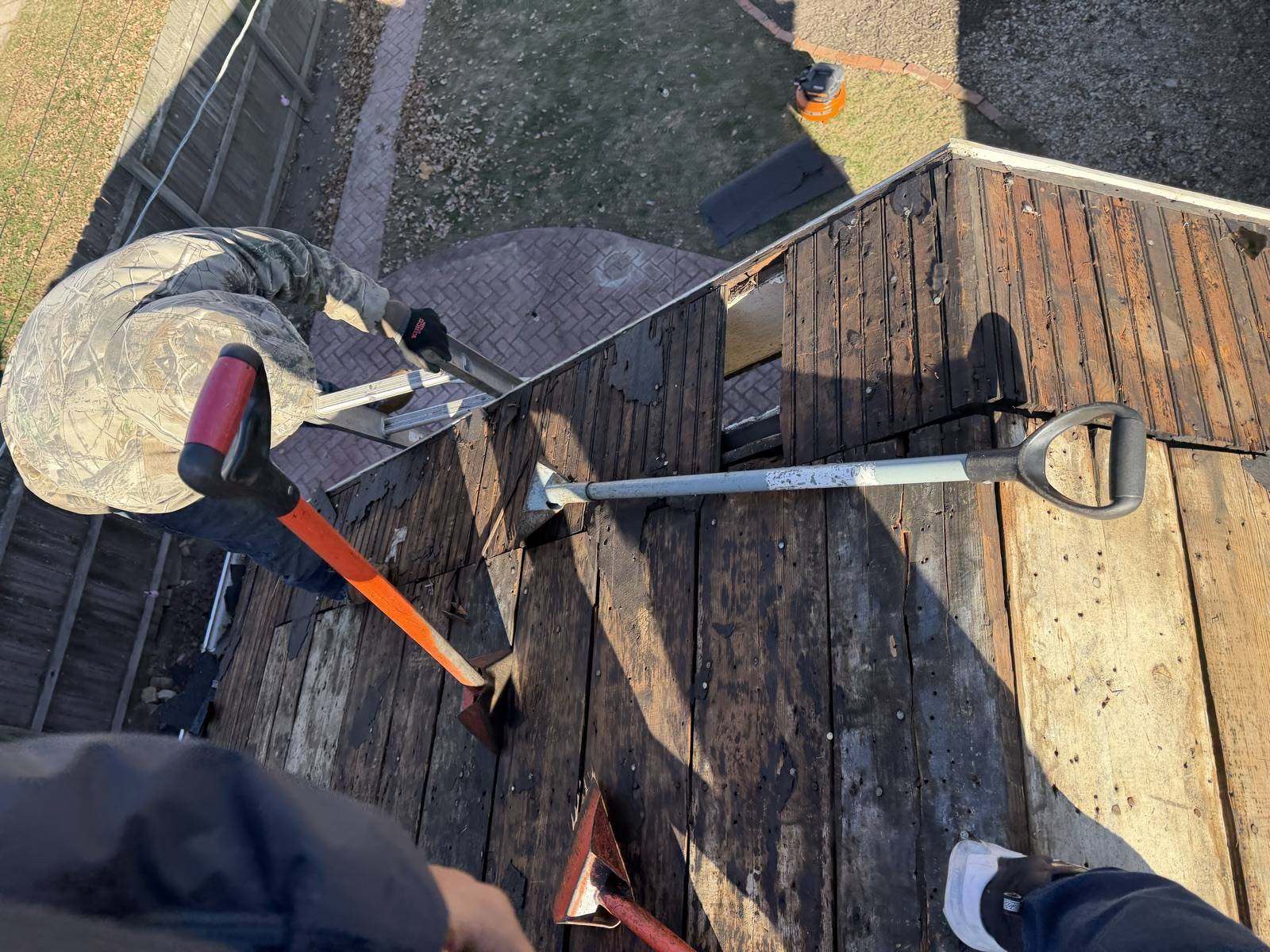
- Presence at the inspection, as the contractorOn the roof, answering questions about the building, pointing at what was found. Not speaking for you and not for your claim.
Then the builder builds it, if you hire them. That is the lane. It is smaller than the advertising in this market implies, and a roofing company that describes a bigger one is describing conduct the state has already addressed.
"A contractor shall not represent or negotiate, or offer or advertise to represent or negotiate, on behalf of an owner or possessor of real estate on any insurance claim in connection with the repair or replacement of roof systems." RSMo 407.725(6).
Four things follow, and they apply to every roofing company in Missouri including Keys Roofing. No roofer may speak to your carrier as you. No roofer may negotiate the amount. No roofer may open, press or settle the claim in your name. And under subsection 2, no roofer may advertise or promise to absorb, rebate or discount any part of your insurance deductible. Subsection 7 makes a breach an unfair practice under the Missouri Merchandising Practices Act.
Read that as a consumer protection rather than a restriction on contractors, because that is what it is. A trade that both prices the repair and argues the settlement has an obvious conflict, and this is the state closing it.
The two parties people forget until they matter
A licensed public adjuster
A separate licensed profession under RSMo chapter 325, licensed and bonded through the Department of Commerce and Insurance. A public adjuster can do the thing a roofer cannot: act for you, in writing, on the claim itself. Missouri sets no statutory cap on what they may charge, the fee is a matter of contract, and RSMo 325.055 bars a public adjuster from doing the repair work or holding a financial interest in the company that does. You have three business days to cancel the engagement. Their page is here.
Your mortgage servicer
If there is a loan on the house, the lender is usually named as a payee on the claim cheque and the money goes into a loss draft account that releases in stages against inspections. This is normal, it is in your deed of trust, and it is not a dispute. What it is, reliably, is slow. The single most useful thing you can do is call the loss draft department in the same week the first payment arrives and ask for their release schedule and their endorsement instructions in writing.
If you remember one paragraph
The claim is yours, the decision is the carrier's, the field adjuster is a reporter rather than a judge, the contractor is a builder who writes documents about a building, the public adjuster is the only trade licensed to argue it for you, and the mortgage company holds the cheque. Anybody offering to collapse two of those roles into one is offering something Missouri has already thought about.
Next: what happens on the day the adjuster comes out, or which deadlines in this process actually bind you.
The contractor's lane, on your roof
Keys Roofing photographs each slope, measures the roof, and writes a scope of the work the roof needs. You keep all of it whether or not a claim ever exists and whether or not you hire us.
If a claim is already open, a Keys estimator can be on the roof during the adjuster's inspection as the contractor and answer questions about the building. Keys does not speak for you to your insurer, does not negotiate any part of the claim, and takes no share of any settlement.
Roofing, gutters and downspouts across greater St. Louis. No siding, no windows, no commercial work.
Ask for a roof inspection
This reaches Keys Roofing, a roofing contractor. It does not reach your insurer, it does not open a claim, and nothing you type here is submitted to anybody but Keys.