The adjuster appointment, step by step
Ninety minutes, a chalk line, a ladder and a tablet. Here is what the field adjuster is actually counting, what your contractor is doing up there at the same time, and the four things worth having in your hand before the truck arrives.
- Typical duration
- 45 to 90 minutes on an average two storey house.
- Who is on the roof
- The adjuster. Your contractor may be, as the contractor.
- Who is not
- You. Stay on the ground and stay available.
- What you get that day
- Usually nothing in writing. The estimate follows.
Four things to have ready, and one thing not to do
- Your own photographs, on a phone you can hand overEspecially anything showing interior water, hail on the ground, or damage that has since been temporarily covered.
- The contractor's measurement and scopeNot as an argument, as a reference. If the adjuster's measurement and yours differ by four squares, everybody would rather find that out on the day than six weeks later.
- AccessGates open, dogs in, cars off the driveway, and a clear ladder set on firm ground. An adjuster who cannot get to a slope will write what they could see.
- A notebookNames, times, what was said, what was promised. Your log is the only record of this conversation that you will own.
The thing not to do: do not stage anything, do not add to anything, and do not present a theory about a storm you did not watch hit the roof. Field adjusters look at roofs all day and they can tell. A claim that starts with a credibility problem does not recover from it.
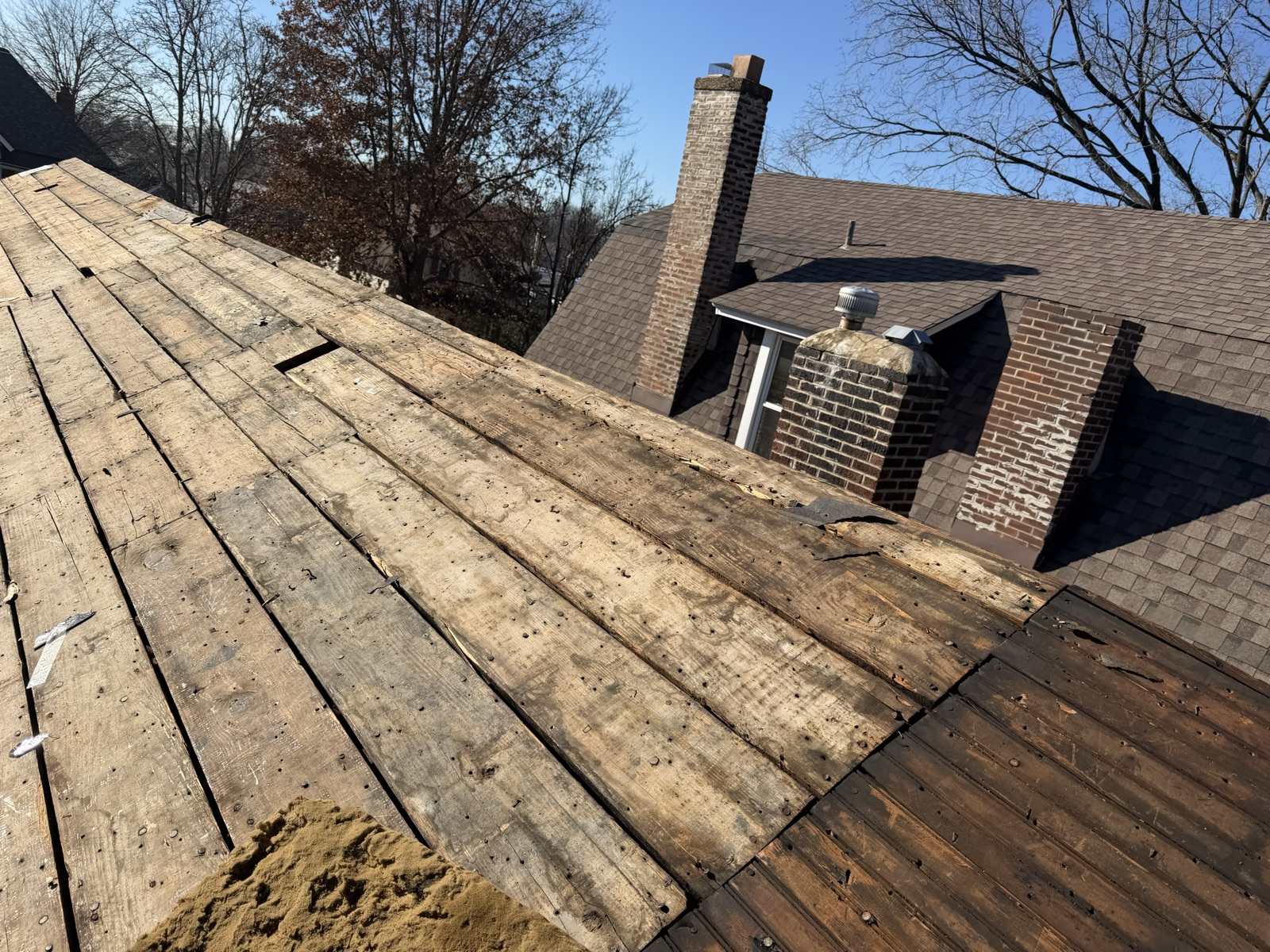
What the adjuster is actually counting
Hail and wind leave different signatures, and the inspection is a search for both. None of this is secret and none of it is adversarial. It is a method.
Test squares
A ten foot by ten foot square is chalked on each slope and the impacts inside it are counted. That count, per square, per slope, is the number that most often decides whether a carrier writes a repair, a slope, or a whole roof. Different carriers use different thresholds and none of them publish theirs.
Soft metals
Gutter aprons, downspouts, vent hoods, turbine caps, air conditioner fins, mailboxes. Aluminium dents where a shingle may only bruise, so soft metal is the corroborating evidence that hail of a given size actually fell on this address on the reported date.
Mat bruising
A hail strike on an asphalt shingle can fracture the mat under the granules without breaking the surface. The adjuster presses the spot with a thumb, feeling for a soft, yielding bruise. This is the part of the inspection homeowners most often misread from the ground.
Directionality
Real hail arrives on a bearing, so damage concentrates on the slopes facing the storm. Uniform "damage" on all four slopes usually turns out to be age, foot traffic, blistering or manufacturing variation, and an adjuster will say so.
Wind evidence
Creased tabs, lifted seals, missing shingles with clean nail lines, and the debris trail on the ground. Wind and hail are often on the same date and the same claim, but they produce visibly different failures and they get written up separately.
The measurement
Squares, pitch, ridge, hip and valley footage, penetrations, and layers. Increasingly taken from aerial imagery rather than a tape. If the aerial report is wrong about the pitch or misses a dormer, the estimate is wrong in the same place.
Present, useful, and staying in the lane
A contractor on the roof during the inspection is normal and it helps. What helps is specific: showing where the test square was chalked on the documentation visit, pointing at a cracked boot or a lifted valley or a soft spot in the decking, saying how many layers came off the last time this style of house was done on this street, and answering questions about the building in a builder's language.
What is not available to that contractor is arguing the claim. No roofer may negotiate the number with the adjuster, may speak on your behalf about coverage, or may press for a scope on your account, because RSMo 407.725(6) forbids a contractor from representing or negotiating on a homeowner's insurance claim, and subsection 7 makes it an unfair practice under the Merchandising Practices Act to try. If a disagreement about scope surfaces on the roof, the right move is for the contractor to note it, and for you to raise it with your carrier in writing afterwards.
In practice this is a smaller difference than it sounds. Two builders and one homeowner standing in a driveway, looking at a measurement that says twenty six squares next to an estimate that says twenty two, is a productive conversation. It only goes wrong when the roofer starts speaking as if the claim were theirs.
The next move is yours, and it is small
The adjuster will very rarely tell you an outcome on the day, and pressing for one is not useful. What is useful is a short email to the claim handler that afternoon, from you, saying who attended, what was inspected, and what you would like to receive: the complete line item estimate rather than the summary, and a copy of the field photographs if the carrier will release them.
Then wait. A straightforward claim outside catastrophe season commonly produces an estimate within a week or two. After a metro-wide event, the same claim can take a month or more, because the desk adjuster is holding a queue that the season built. The 2025 season put 253,241 catastrophic claims into Missouri carriers, and every one of them was somebody's roof.
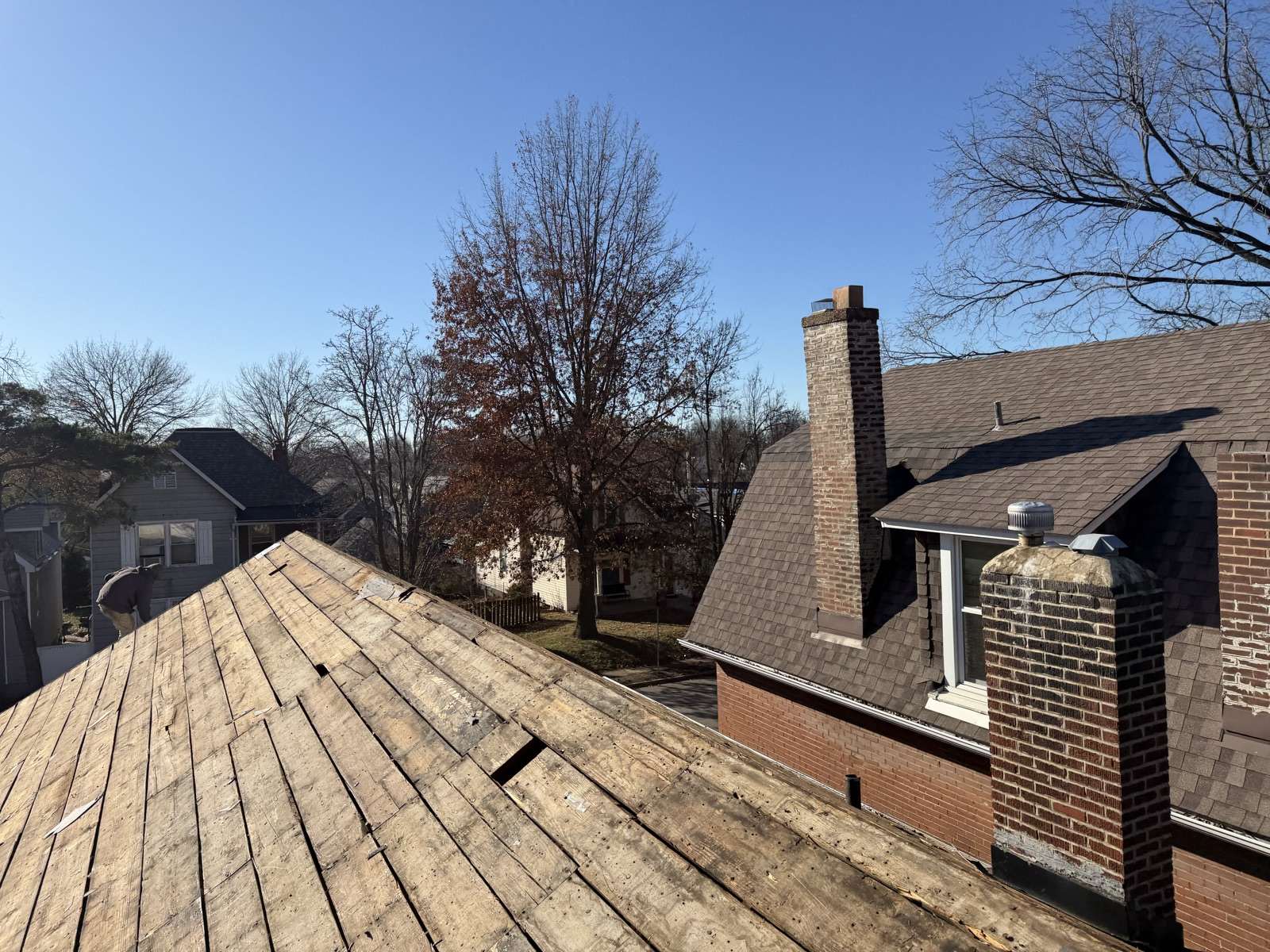
Three that come up every time
Do I need to be home?
Somebody with authority should be, on the ground, for the start and the end. You do not need to watch the inspection and you should not climb up to. What you want is to be available when the adjuster comes down and says what they saw.
Can I ask the adjuster what they think?
Yes, and most will tell you in general terms while making clear that the decision is not theirs. Take the answer as information rather than a commitment, and write down the wording.
What if my roofer and the adjuster disagree?
Then you have two documents that differ, which is a normal and workable situation. Get both in writing, identify the specific lines that differ, and raise those lines with your carrier yourself. Disagreements resolved on a roof by voice have a habit of not existing later.
Documented before the adjuster arrives
Keys Roofing photographs each slope, measures the roof, and writes a scope of the work the roof needs. You keep all of it whether or not a claim ever exists and whether or not you hire us.
If a claim is already open, a Keys estimator can be on the roof during the adjuster's inspection as the contractor and answer questions about the building. Keys does not speak for you to your insurer, does not negotiate any part of the claim, and takes no share of any settlement.
Roofing, gutters and downspouts across greater St. Louis. No siding, no windows, no commercial work.
Ask for a roof inspection
This reaches Keys Roofing, a roofing contractor. It does not reach your insurer, it does not open a claim, and nothing you type here is submitted to anybody but Keys.